The Making of a KiN Vision Frame: Inside the Texture Behind “Obsessively Designed Eyewear”
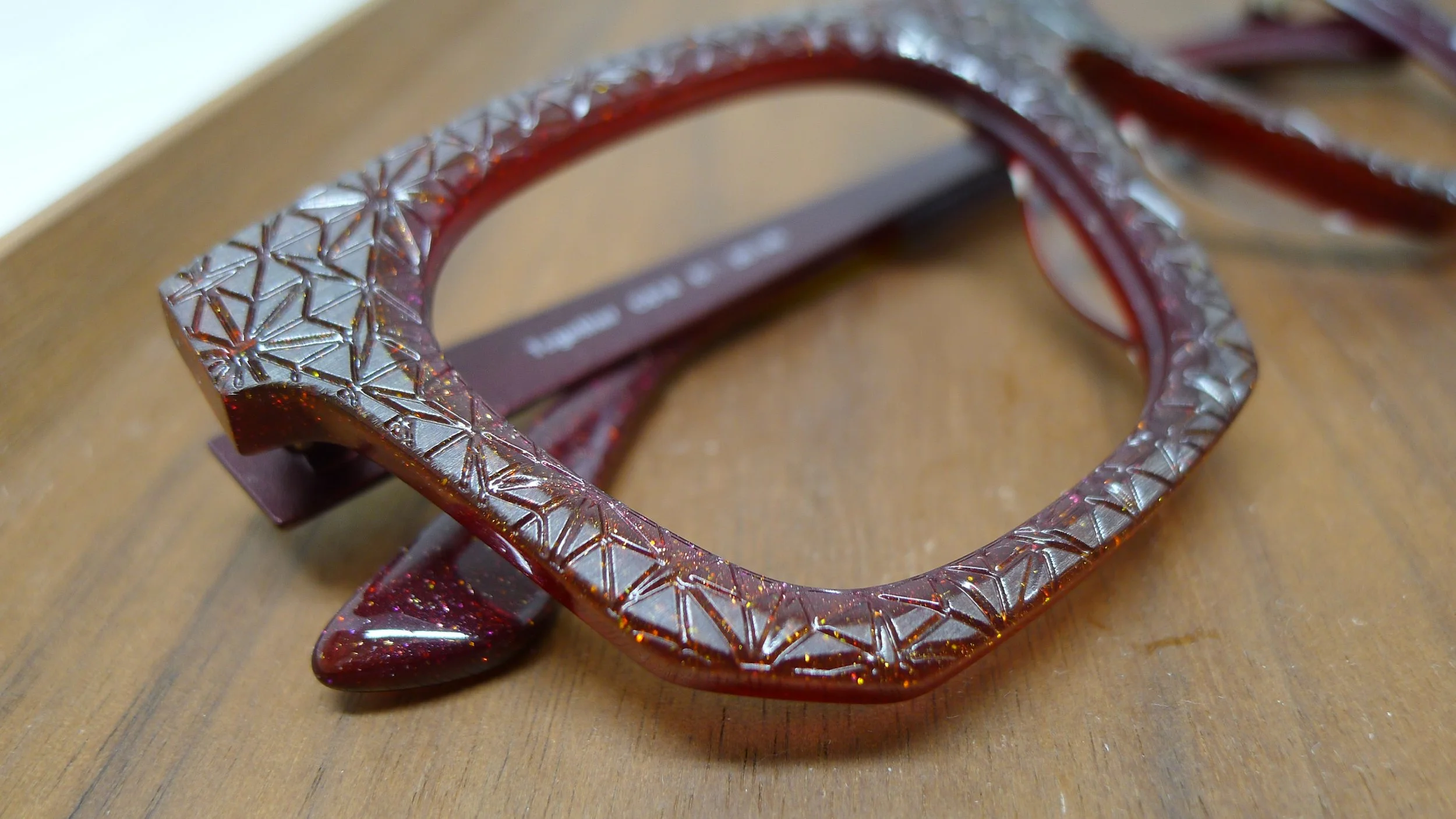
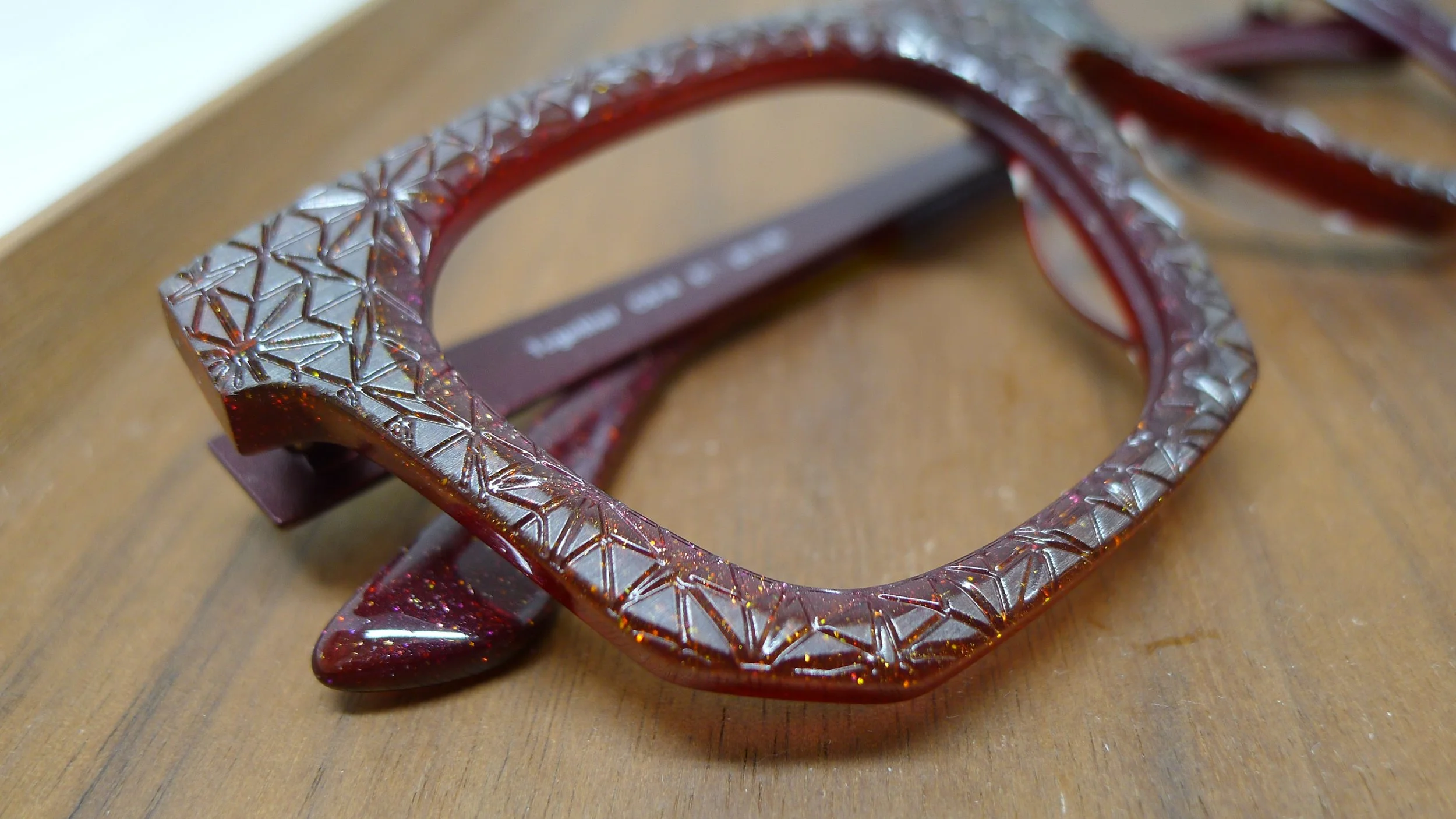
Kin Vision’s frame fronts aren’t printed or painted — they’re engineered. Here’s the exact 4-step process behind their signature textures, from car grilles to wallpaper patterns.
If you’ve ever picked up a pair of Kin Vision sunglasses and run your thumb across the front of the frame, you’ve probably noticed something before you could name it: the front feels different from the back. One side is matte, almost fabric-like. The other is glossy, deep, and reflective. That contrast isn’t a manufacturing accident — it’s the entire point.
Kin Vision’s tagline is “Obsessively Designed Eyewear,” and nowhere is that more literal than in how each frame front gets its texture.
Where the Patterns Come From
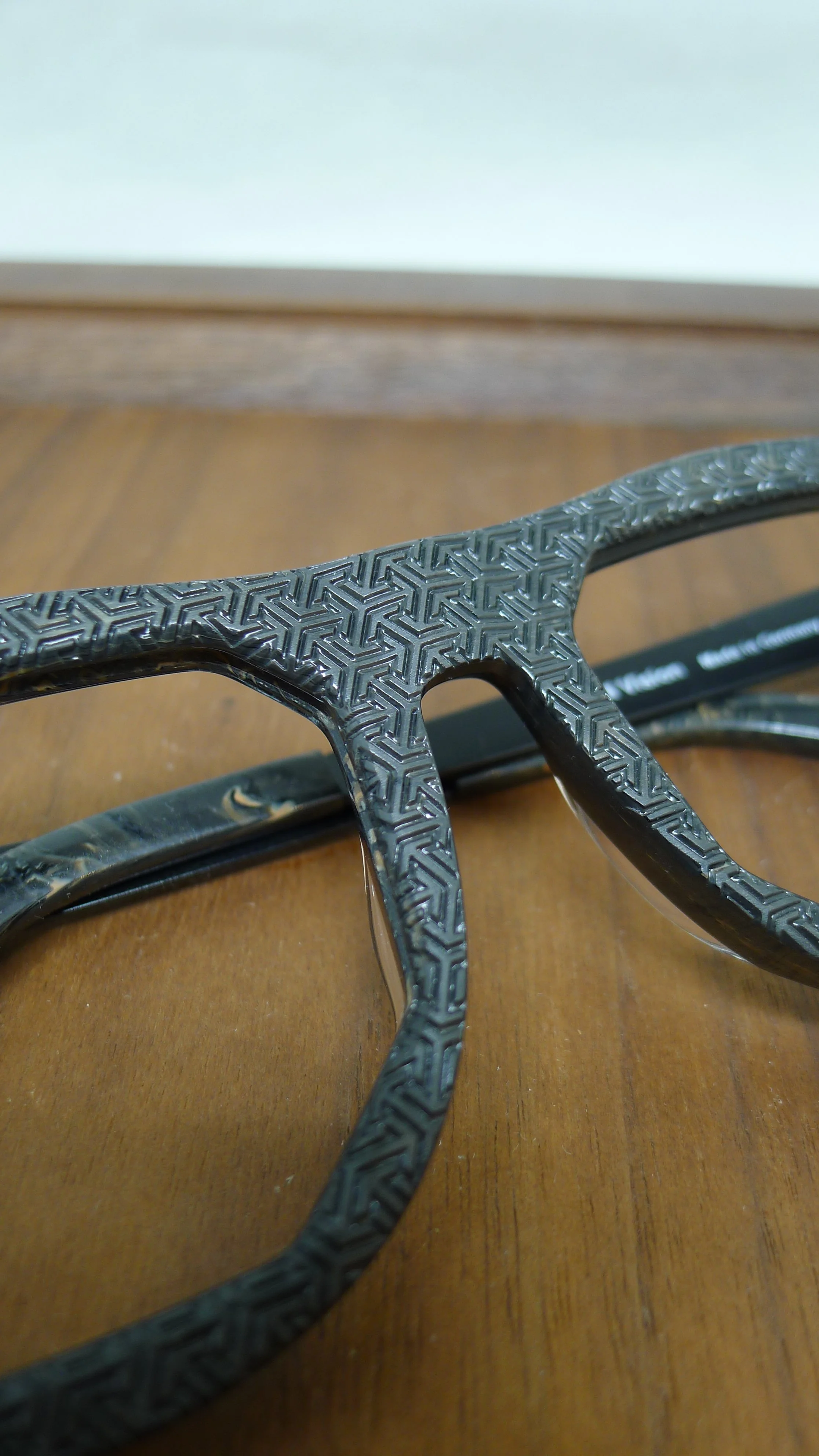
Every Kin Vision model has its own surface texture, and none of them are random. The designers pull inspiration from everyday textures most people walk past without noticing:
The grille of a car
Wallpaper patterns
Flooring and tile designs
Other architectural and industrial textures
The idea is to take something tactile and familiar from the built environment and translate it onto acetate — so the frame has a story and a hand-feel before the wearer even puts it on.
How the Texture Is Actually Made: A 4-Step Process
This is the part most people never see. It happens entirely in production, before the frame ever reaches a shelf.
Tumble polishing. The frame front starts in a polishing machine, where it’s tumbled until the acetate reaches a high shine. At this stage, the entire frame — front and back — is uniformly glossy.
Laser etching the pattern. The chosen texture (car grille, wallpaper, flooring, etc.) is etched into the frame front using laser technology. Because the pattern is cut in rather than printed on, light catches the edges of each etched line. This is what gives the frame its subtle sparkle.
Matting the front surface only. Normally, laser etching would be the final step. But to get the tactile, textured feel KiN Vision wants, the front surface is then matted — and only the front. This is a separate, deliberate step added specifically to achieve the texture.
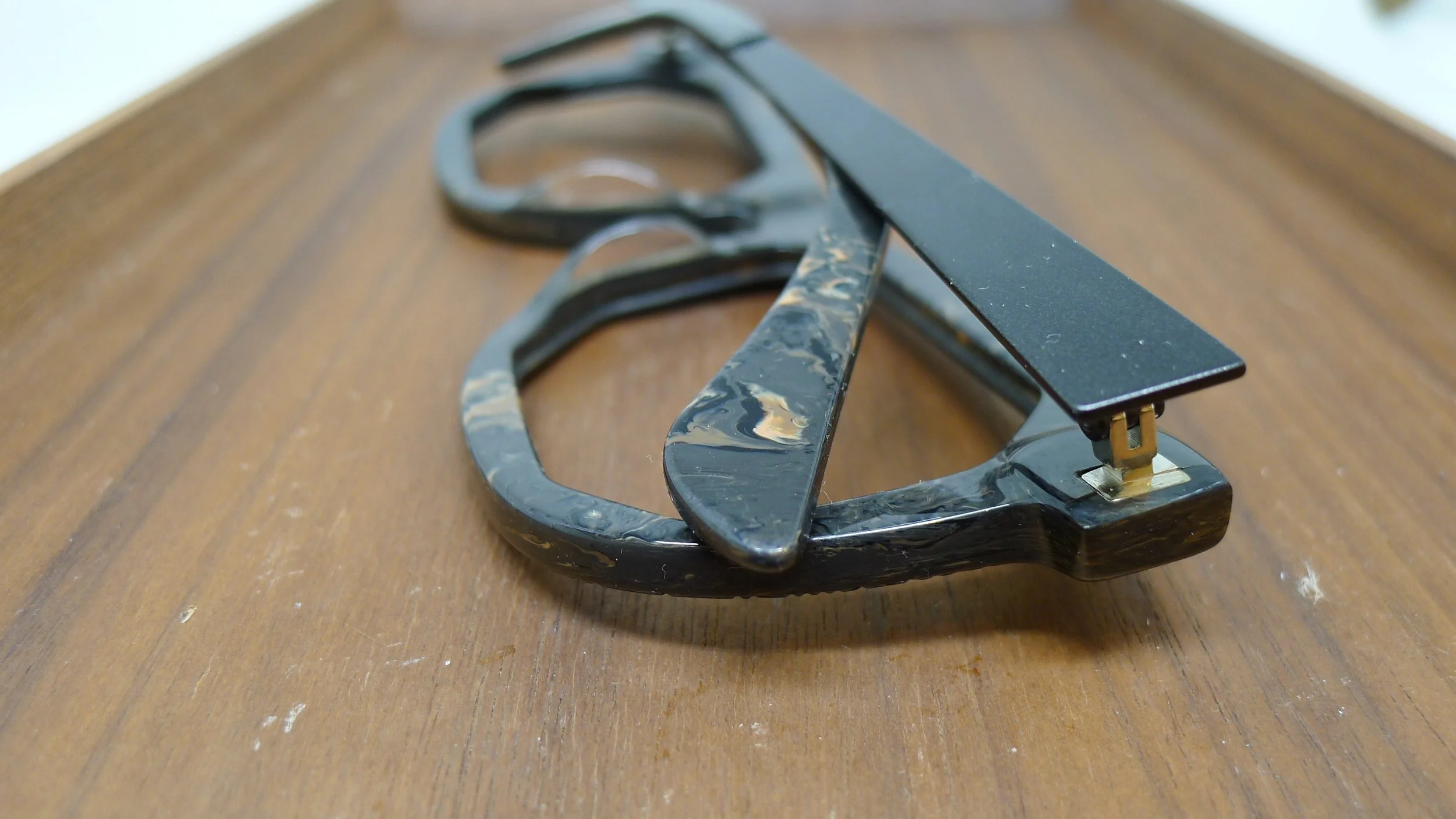
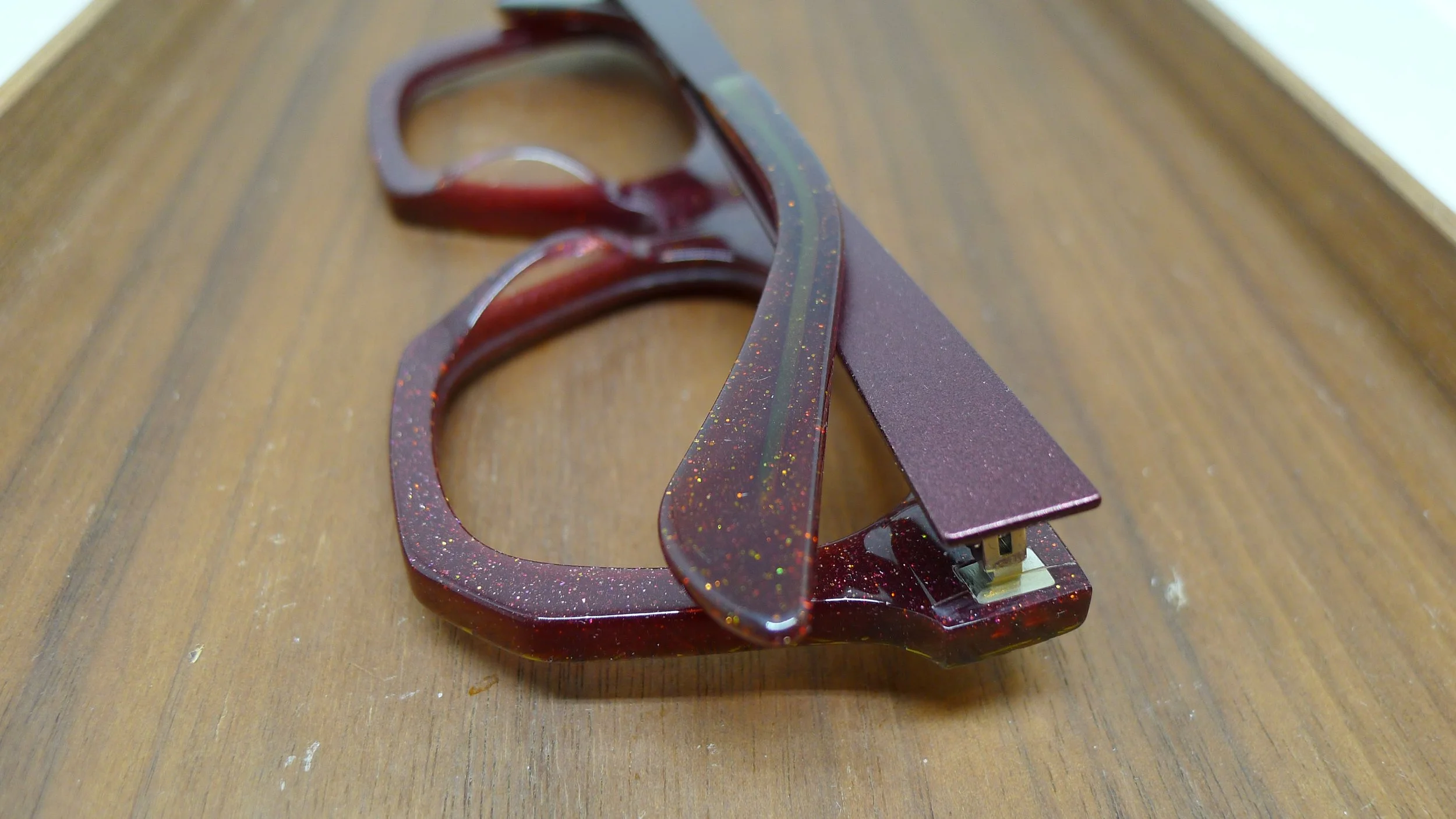
The contrast reveals itself. Because only the front was matted, the back of the frame retains its original polished acetate finish. Flip the frame over and you can see the raw shine it started with in Step 1. The front, meanwhile, keeps a soft matte finish that still catches light off the laser-etched edges from Step 2 — so it’s matte, but never flat or dull.
The result: A frame front that’s textured and matte to the touch, with a controlled sparkle along the etched pattern, sitting opposite a back surface that’s still fully polished. Front and back are intentionally different finishes on the same piece of acetate.
Brand Highlights
What makes KiN Vision worth a closer look:
Never printed or painted. The texture is physically laser etched into the acetate and then finished in stages and not a surface coating that can wear off over time.
Every pattern has a source. Each texture is pulled from real-world design — a car grille, a wallpaper print, a flooring pattern so every frame carries a story, not just a look.
Two finishes, one frame. Flip a KiN Vision frame over and feel the difference yourself: a polished back paired with a matte, textured front, made possible by a process most eyewear brands skip entirely.
Obsessively designed, literally. The tagline isn’t just branding but reflects a multi-stage finishing process (polish, etch, then selectively matte) built for detail that most people notice with their fingers before they notice it with their eyes.
FAQ
Is the texture on KiN Vision frames painted on?
No. It’s laser-etched into the acetate and then finished by hand in stages — so it won’t peel, fade, or wear off like a painted or printed surface can.
Why does the front and back of the frame feel different?
That’s intentional. Only the front surface is matted during production, while the back keeps its original polished finish. Run your thumb across both sides and you’ll feel the contrast — it’s a signature of how KiN Vision frames are made.
Where do the patterns on KiN Vision frames come from?
Everyday design. Each texture is inspired by something real — a car grille, a wallpaper print, a flooring pattern — so no two models feel quite the same.
Will the texture wear off over time?
No. Because the pattern is etched into the acetate itself rather than applied on top, it’s part of the frame’s structure — not a coating that can scratch or rub away with everyday wear.
Does the textured finish affect how the sunglasses feel to wear?
No — the texture is purely on the surface of the frame front. It doesn’t change fit, weight, or comfort; it’s there to be felt and seen, not to alter how the glasses sit on your face.